
Tape-In vs Hand-Tied Hair Extensions: Which Is Better?
Here's a confession: most people go for wrong extensions first.
Not because they are careless. Because nobody explains the actual process in plain language. You read five contradictory blog posts, watch a few rushed videos, and walk into your stylist's chair more confused than when you started. It's time to fix that.
Many people worry over tape-in extensions versus hand-tied extensions as if it is a life-or-death decision. It is not. But getting it wrong costs you time, money, and a few bad hair days along the way. So, let's see how each hair extension method behaves on real heads, not just on paper.
What is the Real Difference Between Tape-Ins and Hand-Tied Extensions?
Short version: tape-ins glue on, hand-tied extensions sew on.
Tape-in hair extensions usually have thin wefts that are pre-coated with a medical grade adhesive, kind of like a ready to go seal. Your stylist takes a little section of your natural hair and then sandwiches it between two tape strips, then presses it down in place. Done. The whole install takes about an hour, sometimes less.
Hand-tied extensions skip adhesive entirely. Your stylist creates beaded rows across your scalp, threads tiny silicone-lined beads onto small sections of hair, then hand-sewn wefts onto that beaded foundation, row by row. No glue ever touches your scalp.
Both fall under semi-permanent hair extensions. Both, when done right, use real human hair. Past that, they're almost nothing alike.
How Do Tape-In Extensions Work?
Picture double sided tape, kind of holding two sheets of paper together. That’s pretty much it. There’s one thin weft tucked under a section of hair, and another weft right above it, then they press together into a little sandwich and it stays put for weeks.
This is exactly why tape-in hair extensions are the go-to for first-timers. Fast application. Flat profile. No needles anywhere near your head. Walk in with thin hair, walk out a couple of hours later looking like you grew it yourself.
How Are Hand-Tied Wefts Applied?
Patience. That's the price of admission here. Your stylist sections your hair into beaded rows, then secures tiny beads right at the root. After that, hand sews wefts through those beads one row at a time, working down your head kind of like a tailor hemming a dress. It's slower. It's also gentler since nothing sticky ever sits against your scalp.
That detail matters more than people think. Itchy scalp, product buildup, that weird tug by week three? Mostly tape-related complaints. Hand-tied clients rarely bring those up.

Tape-In vs Hand-Tied: Side-by-Side Comparison
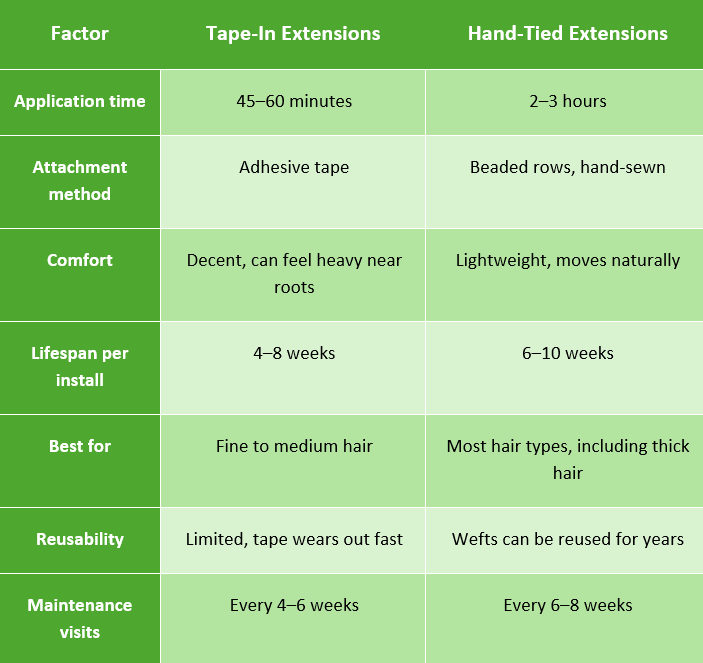
Tape-In vs Hand-Tied Hair Extensions: Which Method Lasts Longer?
It really comes down to the speed at which your hair grows. Most folks see average growth of about a half inch each month, and then as the new strands push through, the “attachment point” ends up drifting further from your scalp no matter what method you chose, simple as that.
Tape-ins feel that drift sooner. The flat wefts twist as new growth comes in, and that twisting turns into visible gaps faster than most people expect. Hand-tied wefts, sitting on flexible beaded rows, tolerate that same growth without looking quite as obvious. You'll still need a move-up appointment eventually. Just not as urgently.
Tape-In vs Hand-Tied Hair Extensions: Is One Method More Comfortable Than the Other?
Comfort really comes down to weight distribution. Tape-ins kind of concentrate the load into a small bunch of flat panels, and some people say they feel this tuggy tightness close to the hairline within just a few weeks. Hand-tied wefts, on the other hand, distribute that same weight across a series of beaded rows instead of pushing it all into just a couple of places.
Ask anyone who sleeps on their side. They'll tell you exactly which method they use to sleep through the night.
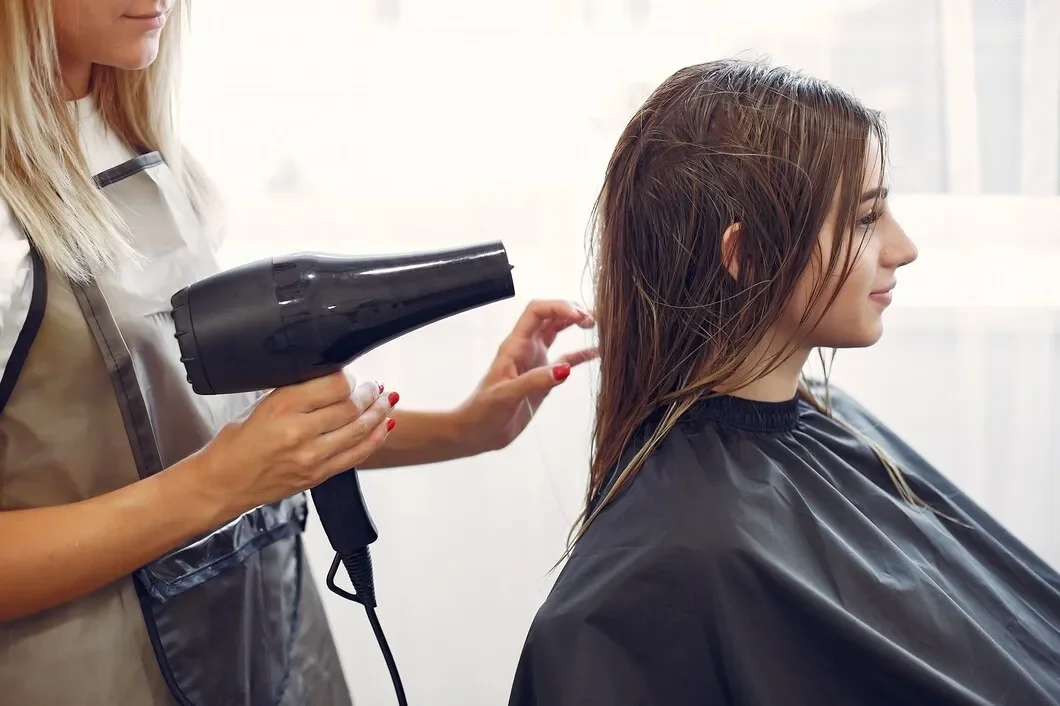
Can You Still Blow Dry, Air Dry, and Style Normally?
Yes. Neither method puts your styling routine on lockdown.
Tape-ins let you blow dry close to the root since the flat wefts don't add bulk under a brush. Air dry days work fine too. Hand-tied wefts give you a touch more freedom for high ponytails and slicked-back looks, since the beaded rows sit flatter than tape panels do. Heat tools work on both. Just don't skip heat protectant, because human hair reacts to damage the same way your natural hair does.
So, Which One Should You Actually Choose?
There is no universal champion here. Only what fits your hair type, your schedule, and your tolerance for salon visits.
Want speed and a lower price tag, and don't mind showing up more often? Tape-ins make sense. Want something that feels closer to your own natural hair, stretches longer between visits, and handles thick, fine, or curly hair types without complaint? Hand-tied extensions earn the extra time in the chair. Either way, hold the line on real human hair. Synthetic blends never move, shine, or blend the same way, no matter which application method you pick.
Let's Get You Matched With the Right Extensions!
Stop making guesses and ask somebody who can actually see your hair, in person. At Satori Beauty, our stylists evaluate your hair density, texture, and even your daily life stuff before suggesting extensions, because the right method is the one built around you, not whatever is trending out there right now. Book a consultation today, and leave wearing extensions that really match your hair, your routine, and your budget.
Frequently Asked Questions
-
Quality wefts last six to twelve months with proper care, though it varies by method. Tape-ins wear out faster than hand-tied wefts, which often get reused across multiple installs.
-
Yes, human hair extensions take color just like natural hair does. Talk to your stylist first, since over-processing weakens the wefts and shortens how long they'll realistically last.
-
Properly installed, well-maintained extensions do not hurt your hair at all. Damage usually traces back to skipped maintenance visits, rough brushing, or wearing extensions far past their recommended timeline.
-
Tape-ins generally need adjusting every four to six weeks. Hand-tied extensions stretch to six or eight weeks.
-
Yes, both methods hold up fine through normal activity. Rinse out chlorine or saltwater right away, let hair air dry when you can, and skip tight wet ponytails overnight.